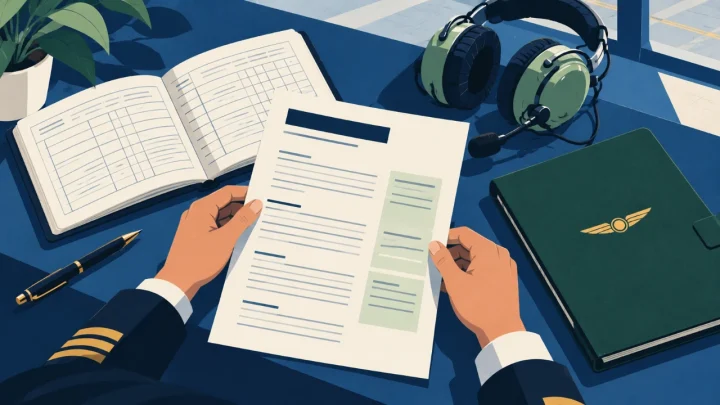
Preparing for an airline simulator assessment starts with the invitation and briefing. Confirm which recruitment pathway you are on, what aircraft or device is used, what material the airline supplies and what it expects you to know beforehand. Build your preparation around that scope.
This guide offers a preparation workflow rather than a flight lesson or a collection of supposed test scenarios. Use current authorised training material and qualified instruction for operational procedures.
First establish which assessment you are attending
“Cadet” can describe an applicant beginning flight training or a qualified pilot entering an airline’s type-rating pathway. Those are different stages. The Fly.hr study of 20 ab-initio cadet selection processes should not be read as evidence that qualified-pilot recruitment excludes simulator assessments.
Two official examples show the distinction. Ryanair’s qualified-cadet page describes a B737-800 simulator assessment including pilot flying and pilot monitoring roles, with handling, crew resource management and flight management assessed. easyJet’s pilot page describes a simulator assessment for direct-entry captains and co-pilots and says candidates receive a briefing. Neither example establishes the format at another airline.
Read the briefing before choosing paid preparation
Extract the assessment aircraft, location, duration if stated, required knowledge, supplied procedures and document requirements. Check whether the briefing identifies preparation that is expected, optional or inappropriate. If an essential point remains unclear, use the communication route the airline permits.
Some airlines explicitly distance themselves from third-party preparation providers. Wizz Air’s pilot recruitment page says its recruitment teams do not endorse or have an affiliation with third-party pilot assessment preparation courses. Verify an endorsement claim at the airline, rather than treating a provider’s branding as evidence.
Build a preparation plan around the published scope
| Area | Preparation task |
|---|---|
| Briefing and logistics | Read the supplied material, confirm attendance details and organise requested documents. |
| Knowledge | Review topics named by the airline using current authorised sources. |
| Aircraft or device familiarity | Identify unfamiliar controls or displays and address them with a qualified instructor if needed. |
| Crew cooperation | Practise clear briefings, listening, monitoring and responding to feedback. |
| Recent performance | Review your own training feedback and choose specific areas to improve. |
Do not copy a stranger’s remembered assessment sequence as though it were an official syllabus. Formats change, candidates may have different tasks, and confident online accounts can omit the briefing context.
Practise both pilot flying and pilot monitoring
Where both roles are in scope, use instructor-led preparation to practise communication, prioritisation and responding to feedback.

Use feedback to prepare, rather than memorising a performance
Ask an instructor to identify a small number of priorities from your recent performance. A focused session might address an unfamiliar display, communication under workload or a recurring issue from previous training. Define the objective before buying simulator time.
After each practice exercise, record what happened, what feedback you received and what you will change next time. Avoid turning the debrief into a list of excuses. Equally, do not invent an answer or pretend to know a procedure that you have not been taught.
If a mistake occurs during assessment, acknowledge the relevant issue, respond within the briefing and procedures, and continue working with the crew. No guide can promise that a particular response will lead to a pass.
Should you book a preparation simulator?
Compare a defined learning need with the cost. Check the instructor’s relevant qualifications, device type, session scope, cancellation terms and whether the provider claims airline approval. A home simulator or entertainment device can look similar without reproducing the assessment environment or authorised training.
Ask what you will learn that you cannot address through the supplied briefing, existing training material or a shorter instructor consultation. Be cautious about promises of a guaranteed pass or access to confidential scenarios. Preparation should improve competence without depending on undisclosed test material.
A focused week
Your seven-day preparation plan
An adaptable planning example. Allow more time when knowledge, skills or documents need it.
Read the brief
Day 1: identify the assessment scope and any information you still need.
Organise the essentials
Day 2: prepare documents and review the topics explicitly named by the airline.
Find your learning priority
Day 3: review recent training feedback and choose the main area to address.
Practise with purpose
Day 4: undertake targeted instructor-led preparation if there is a clear learning need.
Prepare both crew roles
Day 5: practise concise briefings and discuss pilot-monitoring responsibilities.
Check records and travel
Day 6: reconcile CV, logbook and application data; plan travel and rest.
Arrive ready
Day 7: review the supplied material calmly and allow time for the stated check-in.
This schedule is editorial guidance. The airline’s invitation and briefing take precedence.
Keep assessment dates and document tasks in the application tracker. If recent aircraft experience is part of your eligibility, check it against the actual advert; the pilot currency research explains why this can be separate from selection-day performance.
Prepare the rest of the assessment day too
A simulator exercise may share the day with technical and HR interviews. Make sure you can describe your training, hours, gaps and motivation consistently. Use the pilot CV guide to check your records and the interview guide for the wider preparation plan.
Frequently asked questions
Do all cadet applicants take a simulator assessment?
No universal rule applies. Identify whether the programme is ab-initio training or recruitment of an already qualified pilot, then read its published process and invitation.
Must I know the airline’s procedures before selection?
Use the stated briefing requirements. Do not assume you should memorise procedures that the airline has not supplied or asked you to learn.
Can paid preparation guarantee a pass?
No preparation guide can guarantee an airline’s decision. Choose instruction for a defined learning objective and verify any claim of endorsement.
Sources and scope
Checked 2 October 2026: Ryanair qualified-cadet process, easyJet direct-entry process and Wizz Air recruitment guidance. Employer examples are summaries of published pages, not first-hand assessment reports. The schedule and preparation framework are Fly.hr editorial suggestions.