

Getting an ACMI pilot job is less about finding a special “ACMI licence” and more about matching an operator’s aircraft, licence jurisdiction, experience threshold, availability, and contract model. The strongest applications make those five points easy to verify.
This guide explains how to prepare and apply without treating a regulatory minimum as a promise of employment. Requirements change by operator and vacancy, so always check the current advert and the recruiting airline’s own website before spending money on training.
1. Decide which ACMI pilot role and licence system you are targeting
Start with a defined target: First Officer or Captain, aircraft family, licence authority, and the regions where you can legally work. An operator may fly worldwide while recruiting under a specific European or third-country licence framework. A licence that is valid in one jurisdiction is not automatically accepted for every operator or contract.
Build a shortlist around roles for which you can satisfy the stated licence, medical, work-right, recency, and experience requirements. If a vacancy requires a licence conversion or validation, confirm the process with the relevant authority rather than relying on a recruiter’s informal summary.
2. Check your licence, medical, ratings, and recency
For an EASA-path airline role, candidates commonly need an appropriate commercial licence route, instrument privileges, multi-crew preparation, a valid Class 1 medical, and the language proficiency required for the operation. The exact combination depends on the role and training pathway.
“Frozen ATPL” is useful industry shorthand, but it is not the name of a Part-FCL licence. Check what is actually printed on your licence and which theory credits, ratings, certificates, and restrictions are current. EASA’s Easy Access Rules library links to the current Aircrew rules, while the consolidated EU Aircrew Regulation sets out Part-FCL licensing and Part-MED requirements.
Before applying, record the expiry or validity status of your:
- pilot licence and issuing authority;
- Class 1 medical certificate;
- instrument and type ratings, if held;
- language proficiency endorsement;
- licence proficiency check and operator proficiency check, where applicable;
- passport, work permission, and travel documents.
3. Separate legal minima from hiring minima
A regulatory threshold tells you when a licence or privilege may be issued. It does not require an airline to hire at that threshold. Operators can set higher total-time, multi-pilot, type, recency, or command-experience requirements for a particular vacancy.
For example, EASA FCL.510.A requires 1,500 hours for a full ATPL(A), with specified experience categories—not merely 1,500 undifferentiated hours. A First Officer may enter airline selection through a CPL/IR or MPL pathway before holding a full ATPL, subject to the applicable rules and operator requirements. Read every vacancy literally and do not turn a broad hour range into a universal ACMI standard.
Check the advert’s recency wording separately from total hours. Our September 2026 study of 102 pilot vacancies examines published recency and time-on-type requirements; use the current employer advert for your application.
4. Make a deliberate type-rating decision
An in-validity type rating and recent time on the operator’s fleet can make a pilot easier to deploy, but buying a rating speculatively is a major financial decision. Before self-funding, confirm in writing:
- whether the vacancy accepts non-type-rated applicants;
- who selects the approved training organisation;
- whether base training and line training are included;
- what happens if you pass the rating but are not offered line flying;
- whether a bond or repayment clause applies;
- which licence will carry the rating.
A type rating is not a job offer. Compare the full training and employment package, not just the aircraft name.
Before paying for training, use the type-rating decision guide to compare eligibility, complete costs and written employment conditions.
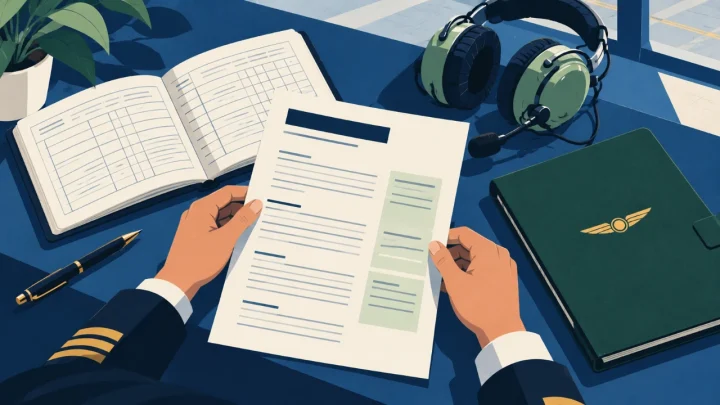
5. Build an application that can be audited quickly
ACMI recruitment can be time-sensitive because capacity is often added for a defined customer programme or season. Make your CV factual, consistent, and easy to screen.
Put the decision-critical facts near the top: licence authority, medical status, aircraft type, total time, time on type, multi-pilot time, pilot-in-command time if relevant, last flight on type, notice period, work rights, and current location. Use the same figures in your CV, application form, and logbook summary.
Prepare clear scans of requested documents, but send sensitive identity records only through a verified airline or recruitment system. Name files consistently and keep a version-controlled master log of every application.
Use our pilot CV guide and free editable template to present dated hours, licence details and recent flying consistently with your logbook and portal.
6. Verify the operator and apply through trusted channels
An ACMI provider conducting commercial air transport is still an airline operator with operational responsibilities. EASA explains the role of an Air Operator Certificate, and its current Air Operations rules are the reference point for EU operator requirements.
Start with our verified European ACMI airlines and careers directory, then use the recruiting company’s legal name, official domain, and careers page. Cross-check the operator with the relevant national aviation authority. Be cautious if the recruiter will not identify the employing entity, asks for payment to secure an interview, uses only a free email account, or requests identity and banking documents before a verifiable process exists.
7. Tailor each application to the actual vacancy
Do not send one generic letter to every operator. Reflect the advertised fleet, base or rotation, start date, and minimum experience. If you do not meet a required item, state that clearly and explain only a concrete path to compliance.
Useful evidence includes recent time on type, multi-base or international experience, winter operations, short-notice availability, and examples of integrating into a new team. Avoid claiming that travel alone proves adaptability; show what you did safely and professionally in an operational setting.
8. Prepare for technical, simulator, and behavioural assessment
The selection format varies. It may include document screening, technical questions, aptitude or psychometric testing, a simulator assessment, and a competency interview. Prepare against the operator’s published instructions and the aircraft and role named in the invitation.
For behavioural questions, use concise examples covering communication, workload management, procedural discipline, decision-making, and response to change. For simulator preparation, prioritise stable instrument flying, briefings, monitoring, call-outs, and crew cooperation over trying to guess a memorised profile. Our airline pilot interview guide provides a broader preparation framework.
For a focused preparation workflow, read the simulator assessment guide and follow the airline’s own briefing.
9. Audit the contract, rotation, and total compensation
An attractive headline rate can hide unpaid positioning, variable flying, self-funded accommodation, insurance costs, training deductions, or long payment terms. Compare guaranteed annual compensation and likely personal costs.
Before signing, identify:
- the legal employer or contracting party;
- employee or independent-contractor status;
- guaranteed pay, variable pay, currency, and payment dates;
- planned rotation and how travel days are treated;
- who pays positioning, hotels, local transport, visas, and medicals;
- sick leave, loss-of-licence cover, pension, and insurance;
- training costs, bonds, repayment triggers, and deductions;
- probation, notice, termination, and governing law;
- tax and social-security responsibilities.
Use the comparison method in our ACMI pilot salary and contract guide, and obtain qualified legal or tax advice when the arrangement crosses jurisdictions.
Collect written answers using the first airline offer checklist, then compare the supported recurring pay and cost inputs with the contract comparator.
A practical 30-day ACMI job-search plan

For current market research, start with our guide to airlines hiring pilots in Europe. Treat every listing as a lead to verify on the airline’s own careers site.
Frequently asked questions
Can a low-time pilot get an ACMI job?
Sometimes, if an operator advertises a pathway that matches the pilot’s licence and experience. There is no single low-time threshold across ACMI airlines. The vacancy’s stated minima and selection outcome control.
Do I need a type rating before applying?
Not always. Some openings require a current rating and recent time; others provide or arrange training. Confirm the complete terms before paying for a rating independently.
Are ACMI pilot jobs always contractor roles?
No. ACMI operators can recruit through different employment and contracting structures. The legal entity, worker status, benefits, tax treatment, and protections should be explicit in the written offer.
Regulatory references last checked 9 September 2026. Airline vacancies and contract terms can change at any time.


Comments